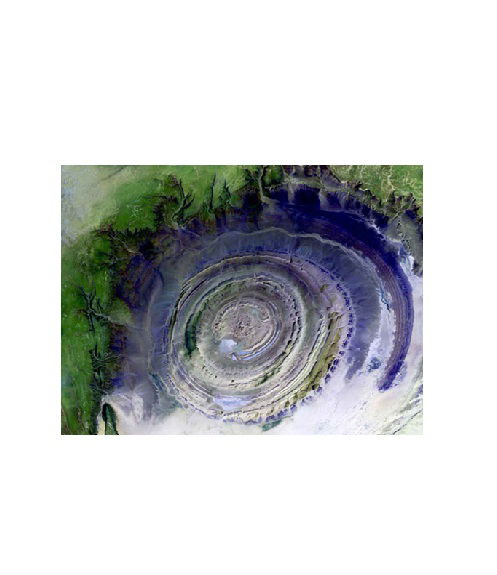
The Richat Structure (Eye of the Sahara, Mauritania), a≈ 50 km circular feature, is conventionally explained as the slow erosion of a approx 100 million year old igneous dome. This paper proposes the Catastrophic Aqueous Vortex Model (CAVM), which posits that the structure's distinct geometry and central igneous core are products of a single, rapid, high-energy hydrodynamic event tied to the Global Flood approx ≈ 4,400 years ago and Catastrophic Plate Tectonics (CPT). We hypothesize that a massive, stable Horizontal Aqueous Vortex rapidly carved the structure at a geological weak point. We present four critical lines of physical evidence—including the structure’s unique fluid mechanics signature—to challenge the long-age, slow-erosion paradigm.
https://doi.org/10.5281/zenodo.17972937